

Walnuts (akhrot in Hindi) are one of the few nuts that provide a meaningful amount of plant-based omega-3 fats, along with protein, fibre and antioxidants. But “a few walnuts a day” is not a precise answer, and eating too many can backfire. So, how many walnuts should you eat daily? This guide explains the main akhrot benefits, the ideal amount, whether soaked walnuts or raw ones are better, the best time to eat walnuts, and who should be careful with portion sizes. It is part of our Dry Fruits & Superfoods series, so you may also like our guide on how many almonds you should eat daily.
Quick Answer: How Many Walnuts Should You Eat Daily?
For most healthy adults, 5-7 whole walnuts (about 14 halves, or 28 g) is the answer to how many walnuts should you eat daily. That amount gives you roughly 185 calories, 4 g of protein, 2 g of fibre and about 2.5 g of plant-based omega-3 (ALA).
No official body sets an exact walnut limit, but the Dietary Guidelines for Indians by ICMR-NIN recommend including nuts and oilseeds as part of a balanced diet. Walnuts work best alongside your meals, not instead of them. The akhrot benefits below come from steady, moderate eating, not large handfuls.
If you are new to walnuts, start with 2-3 a day. Then build up to the full answer to how many walnuts should you eat daily, especially if you have a sensitive stomach.
Wondering how many walnuts per day suits your goal? Here is a quick guide:
| Goal | Walnuts per day (whole) |
| General health | 5-7 (about 28 g) |
| Beginners | 2-3, then build up |
| Weight loss | 3-5 |
| Heart health | 5-7 |
| Diabetes (with doctor’s advice) | 3-5 |
| At night | 1-2 |
Walnuts Nutrition Facts
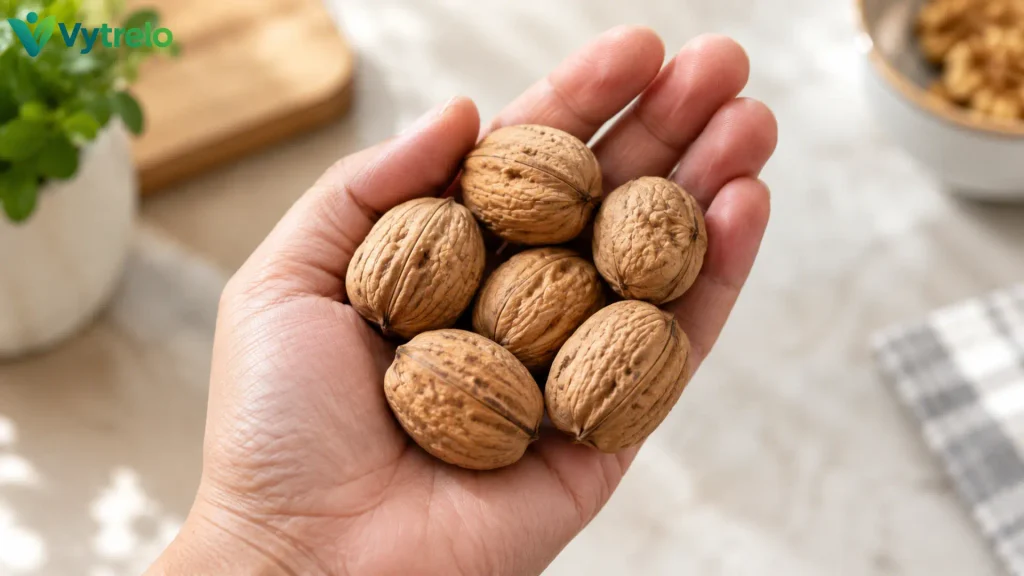
Wondering how many walnuts per day fit into your calorie budget? According to USDA FoodData Central, one 28 g serving (about 7 whole walnuts) provides roughly:
- Calories: about 185
- Protein: 4 g
- Fibre: about 2 g
- Total fat: 18 g, mostly polyunsaturated
- ALA omega-3: about 2.5 g
- Magnesium: about 45 mg
- Copper: about 0.4 mg
Akhrot Benefits: Why Eat Walnuts Every Day?
The health benefits show up when you eat walnuts consistently, not just occasionally. So how many walnuts should you eat daily to see them? Stick to 5-7 whole walnuts. The main akhrot benefits are:
- Brain health: Walnuts contain ALA omega-3 and polyphenols, and studies link regular nut intake with better brain function, though the evidence is not conclusive.
- Heart health: The US FDA allows a qualified health claim that 1.5 ounces of walnuts a day, as part of a low saturated fat diet, may reduce the risk of heart disease.
- Weight management: Healthy fats, protein and fibre promote fullness, which can reduce overeating later.
- Antioxidant support: The brown skin of walnuts is rich in polyphenol antioxidants.
- Gut health: Early research suggests walnuts may support healthy gut bacteria.
Walnuts are a helpful food, not a cure for any condition. Most akhrot benefits depend on regular, moderate portions.
Soaked Walnuts vs Raw Walnuts: Which Is Better?
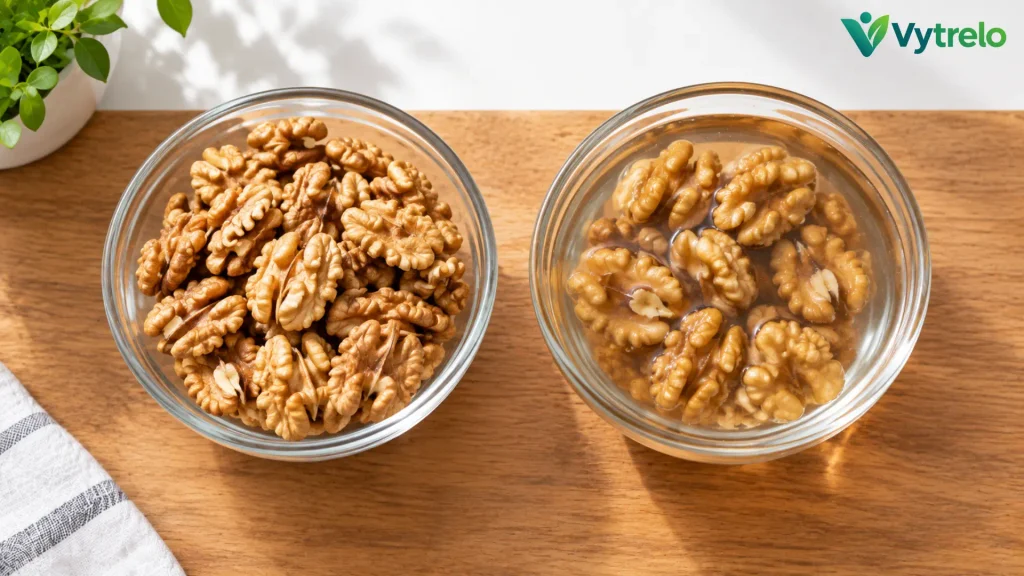
Soaked walnuts are left in water for 6-8 hours, usually overnight. Soaking is believed to:
- Soften the texture and reduce the slightly bitter taste
- Reduce phytic acid, which can interfere with mineral absorption
- Feel gentler on the stomach for some people
Raw walnuts keep their crunch and all of their skin, which holds most of the polyphenol antioxidants. Nutritionally, the gap between soaked and raw walnuts is small, and most akhrot benefits are similar either way. Eating soaked walnuts in the morning is a common traditional practice, and many people consider it the best time to eat walnuts, but scientific evidence for extra benefits is still limited.
How Many Soaked Walnuts to Eat Daily?
The answer to how many walnuts should you eat daily stays the same for soaked walnuts: 5-7 whole walnuts is reasonable for most adults. Count them before soaking. Soaking does not change the calories significantly, so portion control still matters.
Best Time to Eat Walnuts
There is no single correct time, and portion size matters more than timing, so decide how many walnuts should you eat daily first. Then pick the best time to eat walnuts for your goal:
- Morning: Soaked walnuts with breakfast, or mixed into oats or curd, is a popular traditional choice.
- Before a workout: A small handful gives steady energy and protein.
- Between meals: A good mid-morning or evening snack that helps prevent overeating at the next meal.
There is no need to force walnuts on an empty stomach, so the best time to eat walnuts is simply whenever you can stay consistent. If it suits you, start with a smaller portion and see how you feel.
How Many Walnuts Can I Eat at Night?
Keep the portion smaller, around 1-2 walnuts. The best time to eat walnuts is rarely right before sleep, since they are calorie-dense and a large handful adds calories without extra benefit.
How Many Walnuts Per Day for Weight Loss?
For weight loss, how many walnuts should you eat daily? Portion control is the key. Eating 3-5 walnuts instead of a full 7 gives you the fullness benefits without adding much to your calorie budget. Walnuts work best when they replace fried or sugary snacks, not when they are added on top of your current diet.
How Many Walnuts Per Day Can a Diabetic Eat?
For people with diabetes, how many walnuts should you eat daily? Walnuts are generally considered diabetes-friendly because of their low glycemic index, fibre and healthy fats. Many people with diabetes can include 3-5 walnuts a day, but the right amount depends on your blood sugar control and medication, so check with your doctor or dietitian.
How Many Walnuts Should You Eat Daily for Heart Health?
The FDA claim mentioned above refers to 1.5 ounces (about 42 g, or roughly 10 whole walnuts) a day. For most people, 5-7 whole walnuts is enough and easier on the calorie budget, so go higher only if your doctor or dietitian agrees. That is the safest way to decide how many walnuts per day suit you.
Side Effects of Eating Too Many Walnuts
Walnuts are healthy, but too much of a good thing applies here. How many walnuts should you eat daily before problems start? Going far beyond 5-7 on a regular basis can lead to:
- Weight gain: Walnuts are calorie-dense, so extra handfuls add up quickly.
- Digestive discomfort: Too much fibre and fat at once can cause bloating, gas or loose motions.
- Nut allergy reactions: Walnuts are a tree nut. If you are allergic, avoid them completely, since reactions can be serious.
- Rancid walnuts: Their fats spoil easily. If walnuts smell bitter or paint-like, throw them away, and store fresh ones in an airtight container, ideally in the fridge.
Walnuts and Kidney Stones
Walnuts contain oxalates, which are linked to calcium oxalate kidney stones. The NIDDK guidance on diet for kidney stones lists nuts among the foods people with this type of stone may need to limit. If you have had kidney stones, ask your doctor how many walnuts per day are safe for you.
Conclusion
So, how many walnuts should you eat daily? For most healthy adults, 5-7 whole walnuts (about 28 g) is a reasonable portion. Eat a little less for weight loss, check with your doctor if you have diabetes or a risk of kidney stones, and avoid walnuts completely if you have a nut allergy. Whether you eat them soaked or raw, in the morning or as an evening snack, the akhrot benefits come from consistency and portion control more than the exact timing. The best time to eat walnuts is the one you can stick to.
Want more practical nutrition tips? Read our latest posts on the Vytrelo blog, learn more about us, or get in touch if you want to suggest a topic.
How many walnuts per day is safe?
Most healthy adults can eat 5-7 whole walnuts (about 28 g) per day. That is the short answer to how many walnuts should you eat daily. Beginners can start with 2-3 and build up.
Is it safe to eat walnuts every day?
Yes, for most people, and akhrot benefits build up with regular eating. How many walnuts should you eat daily to stay safe? Stick to 5-7 whole walnuts.
Are soaked walnuts better than raw walnuts?
Soaked walnuts may taste milder and feel easier to digest, but the overall nutrient difference from raw walnuts is minimal. Either way, the answer to how many walnuts should you eat daily stays the same.
What is the best time to eat walnuts?
Morning with breakfast or as a snack between meals are the most common times to eat walnuts. Portion size matters more than timing, so decide first: how many walnuts should you eat daily?
Can I eat walnuts and almonds together?
Yes. When combining nuts, how many walnuts should you eat daily? About 3-4, with 8-10 almonds, keeping the total near one ounce.
Who should avoid eating too many walnuts?
People with a tree nut allergy should avoid walnuts completely. Those with a history of oxalate-related kidney stones, and people managing calories or blood sugar, should limit portions and consult a doctor about how many walnuts per day are right for them.
Pingback: 7 Health Benefits of Dry Fruits Science-Backed
Pingback: Pistachio Benefits, Daily Limit & Side Effects | Vytrelo