
This article is for educational purposes only and is not medical advice. Please consult a doctor or dietitian, especially if you are pregnant, diabetic or have allergies. Read our medical disclaimer for more details.
Pistachio benefits go well beyond a tasty snack. These little green kernels give you protein, fiber, healthy fats and antioxidants in just one handful. Most adults do well with about 28 g a day, which is roughly 49 kernels. But the right amount, the right time and a few side effects all matter. In this guide, we cover pistachio nutrition facts, how many pistachios per day suit you, and who should be careful. If you want a happier heart, steadier energy or smarter snacking, the answers are here.
Quick Answer: Most healthy adults can eat about 28 g, or roughly 49 shelled pistachios, per day. Pistachio benefits include better heart health, steady blood sugar, good gut health and easier weight control. Choose unsalted kernels, watch your portion size, and enjoy them as a morning or evening snack.
Pistachio Nutrition Facts
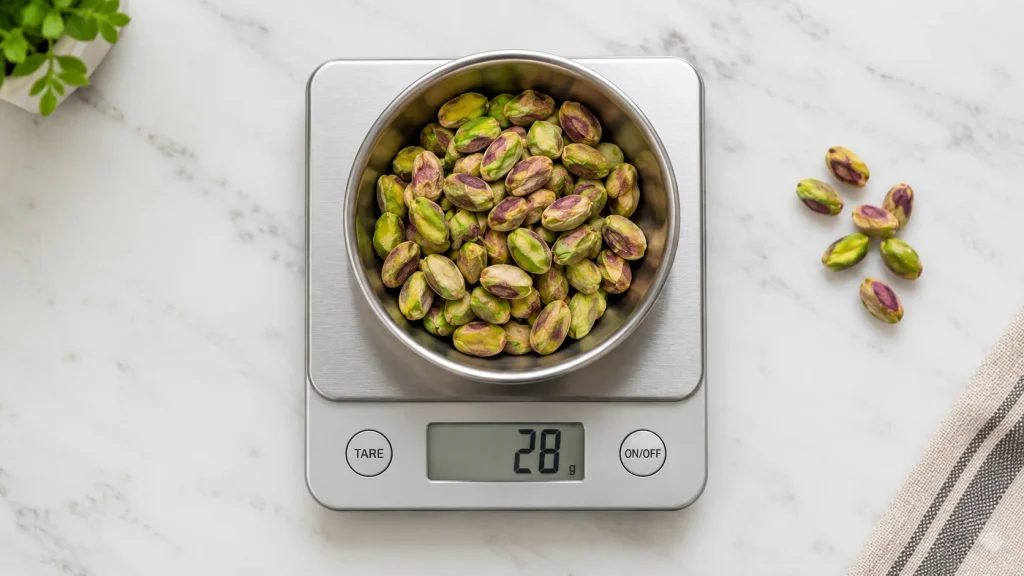
Before the benefits, let us look at what is inside. Pistachio nutrition facts show a nut that is rich in plant protein, fiber and unsaturated fats. The numbers below are for one 28 g (1 oz) serving of raw, shelled pistachios, based on USDA FoodData Central. Values are approximate and vary by brand and roasting.
| Nutrient (per 28 g, about 49 kernels) | Approximate amount |
| Calories | about 159 kcal |
| Protein | about 5.7 g |
| Fiber | about 3 g |
| Total fat | about 12.9 g |
| Carbohydrates | about 7.7 g |
| Potassium | about 285 mg |
| Vitamin B6 | about 0.5 mg |
Pistachio calories are similar to other nuts, so portion size matters. Most of the fat is the healthy kind. Pistachios also give antioxidants, including lutein, which is why the health benefits of pistachios cover so many areas. The vitamin B6 in pistachios helps your body use protein and make energy, and you can read more in this NIH fact sheet on vitamin B6.
Top Pistachio Benefits for Your Health
Here are the main health benefits of pistachios, explained in simple words. We cover pistachio benefits and side effects honestly.
Is Pistachio Good for Heart Health?
Yes, in moderation. Pistachios contain healthy fats, fiber, potassium and plant compounds. Studies on nuts, including pistachios, link regular intake with lower LDL cholesterol when nuts replace less healthy snacks. Potassium also supports healthy blood pressure. Heart-related pistachio benefits are strongest with unsalted kernels. Trusted groups like the Mayo Clinic also note that nuts can be part of a heart-healthy eating pattern. [VERIFY LINK: American Heart Association page on nuts]
Weight Management
Protein, fiber and fat keep you full for longer. Shelling pistachios also slows you down, so you tend to eat less. This is one of the most practical pistachio benefits for people who snack often. We explain more in the weight loss section below.
Pistachios for Blood Sugar Control
Pistachios are low in carbs and high in fiber and protein, so they cause a slow rise in blood sugar. That is why pistachios for blood sugar control is a popular topic. Eating them with a meal or as a swap for biscuits may help keep sugar spikes smaller. People with diabetes should still check portions and talk to their doctor, as noted in our health information disclaimer.
Pistachio Benefits for Eyes
Pistachios are one of the few nuts with notable amounts of lutein and zeaxanthin. These antioxidants collect in the retina and help protect eyes from blue light and normal wear. Among all the perks, this one is quite unique. They will not replace glasses or medical care, but they support long-term eye health.
Gut Health
The fiber in pistachios feeds friendly gut bacteria, which supports gut health and regular digestion. A 28 g serving gives about 3 g of fiber. Drink enough water as you raise your fiber intake, so your stomach stays comfortable.
Pistachio Benefits for Skin
Pistachios contain vitamin E, healthy fats and antioxidants. These help protect skin cells from damage and support a healthy glow. Pistachio benefits for skin come from your whole diet, so pair them with fruits, vegetables and enough water.
Steady Energy
The mix of protein, healthy fats and B vitamins gives slow, steady energy rather than a sugar crash. A small handful in the afternoon can beat chips or sweets.
How Many Pistachios Per Day Should You Eat?
How Many Pistachios Can I Eat in a Day?
For most healthy adults, a good pistachios daily intake is one 28 g serving, or about 49 kernels. If you want a lighter plan, 20 to 25 kernels is also fine. People watching calories or blood sugar may prefer the smaller amount.
If you are asking how many pistachios per day is too many, going far above 28 g regularly adds extra calories and may cause bloating. Each extra handful adds around 150 to 170 pistachio calories.
Is It Okay to Eat Pistachios Every Day?
Yes. For most people, a pistachios daily intake of one serving is fine, as long as you stay near one serving and have no allergy. Rotate with how many almonds you should eat daily and the daily walnut intake guide to get different nutrients. Our overview of the health benefits of dry fruits can help you plan a mix.
Best Time to Eat Pistachios
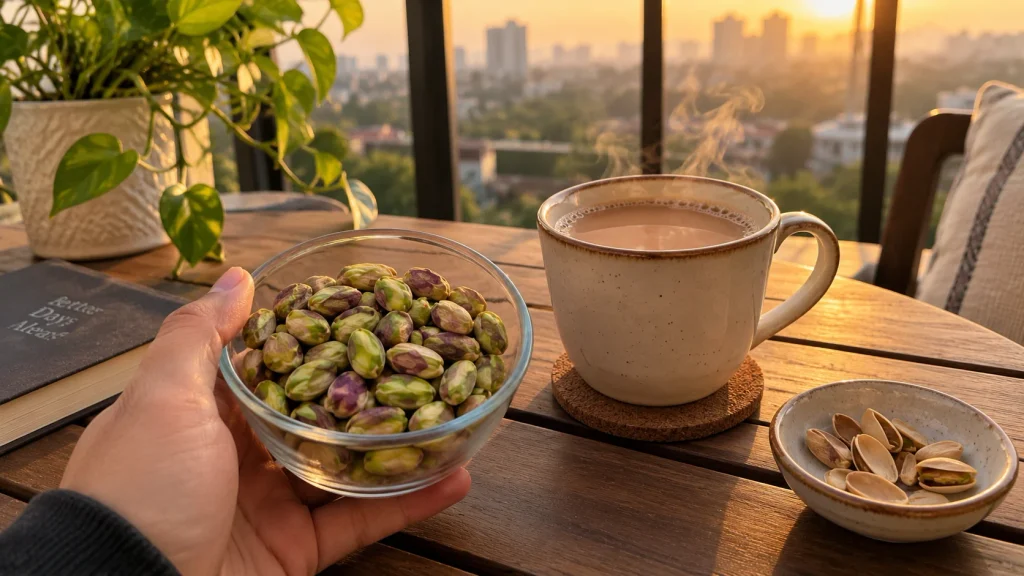
There is no single magic hour. The best time to eat pistachios is when it helps you eat better overall. Here is how each time slot works.
- Morning: A small handful with breakfast adds protein and keeps you full until lunch.
- Evening snack: Around 4 to 6 pm is a great time. It stops hunger before dinner and helps you avoid fried snacks.
- Night: See the next section.
- For weight loss: A mid-morning or evening snack works best, as shown below.
Pistachios at Night: Benefits and Cautions
Pistachios at night benefits some people, since they contain a little melatonin and vitamin B6, and a few kernels can curb late hunger. Keep it small, about 10 to 15 kernels, because a heavy nut portion late in the evening may feel hard to digest.
Best Time to Eat Pistachios for Weight Loss
For weight loss, the ideal slot is mid-morning or late afternoon, when cravings are highest. Eat them in place of biscuits or namkeen, not on top of them.
Pistachio Benefits for Men and Women
Pistachio Benefits for Men
Pistachio benefits for men often relate to heart health, muscle support and energy. The protein and potassium help active men recover and manage blood pressure. Pistachios also contain arginine, an amino acid linked to healthy blood flow. Research on pistachios and erectile function is small, so treat it as a possible extra, not a promise.
Pistachio Benefits for Women
Pistachio benefits for women include fiber for digestion, healthy fats for hormone balance, and vitamin B6 for energy. Pistachios also give small amounts of iron, calcium and magnesium. Women can use them as a snack that helps in busy routines, in pregnancy and after menopause, when heart health becomes a higher priority.
Pistachios for Weight Loss
Are Pistachios Good for Weight Loss?
They can be. The pistachio nutrition facts show a calorie-dense nut, but protein and fiber help you feel full, and not every calorie is absorbed from whole nuts. Shell-in-hand eating also slows your pace. Studies suggest people who add nuts to a balanced diet do not gain extra weight, but you still need a calorie balance.
How Many Pistachios for Weight Loss?
Try 20 to 30 kernels a day, about 15 to 20 g. This gives you the benefits while keeping calories near 100 to 120. Choose plain or lightly roasted ones, and avoid salted, masala or sugar-coated types.
Soaked vs Raw Pistachios
Many Indian homes soak almonds, so people ask about soaked vs raw pistachios. Pistachios do not have a bitter brown skin like almonds, so soaking is optional. Soaking may soften them and make them a little easier to chew and digest. Raw pistachios give you more crunch and are easier to carry.
The pistachio nutrition facts are almost the same either way. Pick what suits your stomach. If raw nuts make you bloated, try soaking for 4 to 6 hours.
Are Salted Pistachios Healthy?
Salted pistachios are fine as an occasional treat, but unsalted is better. So, are salted pistachios healthy? The nut itself is healthy. The main pistachio side effects here come from sodium. A handful of salted kernels can add a good chunk of your daily limit, and high sodium may raise blood pressure over time. The World Health Organization suggests adults keep salt below 5 g a day.
If you love the salted taste, pick lightly salted packs and read the label. Better still, buy plain kernels and add your own pinch of spice.
Pistachios During Pregnancy
Pistachios during pregnancy are generally safe in moderate amounts if you have no nut allergy. They offer protein, fiber, folate-friendly nutrition, vitamin B6 and healthy fats. Vitamin B6 is often discussed for pregnancy nausea, but talk to your doctor before using it for that purpose.
Stick to about a small handful and choose fresh, unsalted nuts from a trusted seller. Every pregnancy is different, so check with your doctor, and see our educational-use notice. For national guidance on food and nutrition in India, you can visit ICMR-National Institute of Nutrition. [VERIFY LINK: ICMR-NIN Dietary Guidelines for Indians page]
Pistachios vs Almonds
Both are great. Pistachios vs almonds is not a contest, because each wins in some areas. Values below are approximate per 28 g.
| Per 28 g | Pistachios | Almonds |
| Calories | about 159 kcal | about 164 kcal |
| Protein | about 5.7 g | about 6 g |
| Fiber | about 3 g | about 3.5 g |
| Fat | about 12.9 g | about 14 g |
| Potassium | about 285 mg | about 208 mg |
| Vitamin B6 | higher | lower |
| Vitamin E and calcium | lower | higher |
| Number of kernels | about 49 | about 23 |
Pistachios give you more kernels per serving, plus more potassium, vitamin B6 and lutein. Almonds lead in vitamin E and calcium. The smart move is to enjoy both. You can also explore cashew benefits in our guide to cashew benefits.
Pistachio Side Effects and Who Should Avoid Them
Pistachio benefits and side effects go together, so here is the honest side. Pistachio side effects are rare in small amounts, but they can happen.
- Allergy: Pistachios are tree nuts. An allergy can cause itching, swelling or breathing trouble. People allergic to cashews or mango may react too, since they are related.
- Weight gain: Too many pistachios add calories quickly.
- Bloating and gas: Pistachios are high in fiber and fermentable carbs, which may upset sensitive stomachs, especially with IBS.
- High sodium: Salted types may raise blood pressure.
- Kidney issues: Pistachios have potassium and oxalates. People with kidney disease or a history of kidney stones should ask their doctor first.
- Mold risk: Old or badly stored nuts can grow mold. Buy fresh, sealed packs and avoid musty or bitter kernels.
Anyone with a nut allergy should avoid them completely. If you take medicines or have a health condition, talk to your doctor and read our medical disclaimer page.
Conclusion
Pistachio benefits are real, simple and easy to enjoy. A 28 g handful, about 49 kernels, gives protein, fiber, healthy fats and antioxidants for your heart, eyes, gut and skin. Keep the portion size steady, pick unsalted kernels, and eat them at a time that helps you skip junk snacks. Know the pistachio side effects, such as allergy, sodium and digestive upset, and speak with your doctor if you have a health condition.
Ready to try them? Start with a small daily handful of fresh, unsalted pistachios from Vytrelo and see how they fit your routine.
-
How many pistachios can I eat in a day?
Most healthy adults can eat about 28 g a day, which is around 49 shelled pistachios. If you are watching weight or blood sugar, 20 to 25 kernels is a good start. Eating much more can add calories and cause pistachio side effects like bloating.
-
Is pistachio good for heart health?
Yes, in moderation. Pistachios provide healthy fats, fiber, potassium and antioxidants, and studies link nut intake with lower LDL cholesterol. Choose unsalted kernels, because extra sodium can work against your heart. They support a heart-healthy diet but do not replace medical treatment.
-
Are pistachios good for weight loss?
They can help when portions are controlled. Protein and fiber keep you full, and shelling slows your eating. About 20 to 30 kernels a day works for many people. Swap them for fried or sugary snacks rather than adding them on top of your usual food.
-
What is the best time to eat pistachios?
The best time is a mid-morning or evening snack, when hunger and cravings peak. A small handful with breakfast also works well. At night, keep it to 10 to 15 kernels. Consistency and portion size matter more than the exact hour.
-
Are salted pistachios healthy?
Salted pistachios are okay occasionally, but unsalted ones are healthier. The extra sodium may raise blood pressure when eaten often. If you enjoy the taste, choose lightly salted packs, check the label, and keep to a small handful. Plain kernels are the best daily choice.
-
Can I eat pistachios every day?
Yes, most people can eat pistachios daily if they have no nut allergy and keep to about one 28 g serving. Mix them with other nuts for variety. If you have kidney issues, digestive problems or take regular medicines, check with your doctor first.